Engineering
The Future of
Flight & Space
A comprehensive exploration of aerospace engineering—from atmospheric flight to deep space exploration, covering career paths, market trends, and cutting-edge innovations shaping humanity's journey beyond Earth.
Educational Foundation
Bachelor's degree minimum requirement with opportunities for advanced specialization through master's and PhD programs.
Market Growth
Engineering services outsourcing market projected to reach $730B by 2032 with 25.3% CAGR growth rate.
Salary Range
US average: $95,505-$108,638 annually. Senior roles can exceed $147,000 with experience and specialization.
Introduction to Aerospace Engineering
Aerospace engineering represents humanity's most ambitious pursuit—the mastery of flight within and beyond Earth's atmosphere. This multifaceted discipline integrates principles from mechanical, electrical, and materials engineering with computer science to tackle the complex challenges of atmospheric and space flight [93].
Core Disciplines
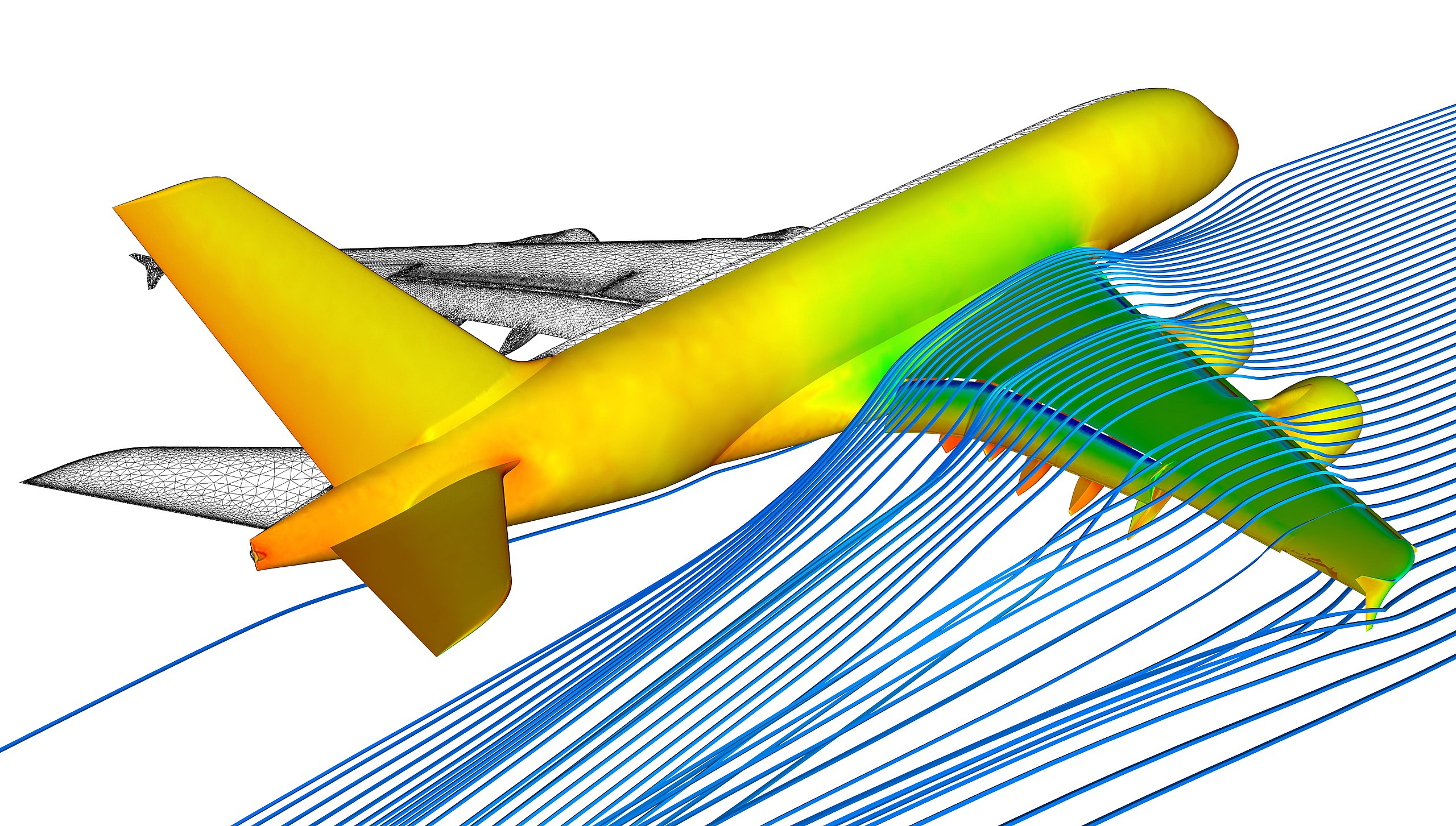
The field encompasses four fundamental pillars: aerodynamics (study of airflow), propulsion (thrust generation), structures (vehicle integrity), and guidance and control systems (trajectory management) [1]. Aerospace engineers continuously push technological boundaries to enhance capabilities such as airfreight capacity, fuel efficiency, and pollution reduction [33].
Role and Responsibilities
Key Duties
- Research, design, develop, and test aerospace vehicles and systems [5]
- Develop computer simulations using advanced mathematical modeling
- Supervise manufacturing, assembly, and quality control processes
- Coordinate ground and flight tests to validate designs and ensure safety

Innovation and Problem-Solving
Aerospace engineers confront complex challenges requiring creative, multidisciplinary solutions. From developing materials for hypersonic flight to designing sustainable propulsion systems, innovation drives the industry forward [6] [85].
Educational Pathways
Bachelor's Degree
Minimum requirement for entry-level positions. Covers core principles including aerodynamics, propulsion, and structures [1] [26].
- • Aerospace engineering
- • Mechanical engineering
- • Electrical engineering
Master's Degree
Enables specialization and qualifies for advanced positions. In Quebec, leads to 86.7% employability rate [6] [24].
- • Advanced aerodynamics
- • Propulsion systems
- • Space systems engineering
PhD
For research, academia, and technical leadership roles. Involves original research contributing to field advancement [24].
- • Advanced research
- • Academic careers
- • Technical leadership
Continuous Learning & Certifications
The rapidly evolving aerospace field demands lifelong learning. Professional certifications and continuing education are essential for career advancement [1] [6].
Professional Certifications
- • Chartered Engineer status
- • Professional order membership
- • Specialized technical training
Emerging Areas
- • Sustainable aviation
- • Autonomous systems
- • Space exploration technologies
Career Progression
Entry-Level Positions
Junior Systems Engineer, Systems Engineering Intern. Work under supervision, assisting in design, development, and testing while building foundational experience [28].
Mid-Career Advancement
Systems Engineer, Project Engineer. Greater responsibility, complex tasks, and specialization. Leadership of smaller projects and subsystems [28].
Senior Leadership Roles
Senior Systems Engineer, Principal Engineer. Extensive experience, advanced education, demonstrated leadership. Oversight of major projects and mentoring [28].
Specializations
Core Disciplines
Aerodynamics
Study of airflow and its interaction with solid surfaces. Optimization of vehicle shapes for performance and efficiency [1].
Propulsion
Design of engines and fuel systems generating thrust for flight, from jet engines to rocket propulsion [1].
Structures & Materials
Ensuring physical integrity and durability using advanced materials like composites and alloys [29].
Avionics & Controls
Electronic systems for communication, navigation, and flight control. Guidance and control algorithms [93].
Market Analysis (2025)
Global Market Size
Notable Cases & Examples
Landmark Projects
SpaceX Starship
Fully reusable spacecraft for Moon and Mars missions, featuring rapid prototyping and iterative design approach.
NASA DART Mission
First planetary defense test, successfully altering an asteroid's orbit through kinetic impact (2022).
Cutting-Edge Developments
Academic Innovation
University programs foster hands-on learning through ambitious projects. Wichita State University's 2025 Senior Design Projects include [110]:
- Modular STOL UAV for agile deployment
- STOL aircraft for disaster power delivery
- Organ transport aircraft design
- Small satellite technology development
Leading Organizations
Major Companies
Top Academic Institutions
MIT
Autonomous systems, space propulsion, computational fluid dynamics
Stanford
Aeronautics, astronautics, aerospace systems design
TU Delft
Wind energy, flight physics, aerospace structures
Imperial College
Computational methods, flight dynamics, sustainable aviation